Over the past decade since its founding, as a flagship project of China-Russia humanitarian cooperation, Shenzhen MSU-BIT University has remained steadfast in its fundamental mission of fostering virtue through education. Leveraging the unique strengths of China-Russia joint education, the university has steadily advanced the cultivation of versatile, internationalized, and innovative talent. For ten years, the university has kept talent cultivation at its core, upheld the principle of putting people first, pursued connotation-driven development, maintained a firm grasp on educational direction, and consolidated disciplinary foundations. By institutionalizing the foundation and enhancing connotation through quality control, the university has built a robust institutional safeguard and quality defense line for high-quality talent cultivation.

Over the past decade, the university has adhered to soul-casting education, building an ideological and political education system that integrates Chinese and foreign approaches. It has integrated the requirements of moral education into every aspect of teaching management, every course, and every activity, while giving equal weight to pedagogical mutual learning between China and Russia and value guidance. Treating curriculum-based ideological education as a key lever, the university has continuously optimized course offerings and embedded the cultivation of patriotism, cross-cultural competence, and global vision into the entire classroom teaching process, achieving an organic unity of knowledge imparting, ability cultivation, and value shaping. At the same time, the university has actively explored pathways for ideological education for international students, integrating Chinese national conditions education, excellent traditional Chinese culture, and civilization exchange and mutual learning into classrooms, thereby forming a collaborative education pattern in which "Chinese students deepen their patriotism while international students enhance their understanding and recognition of China."
Over the past decade, the university has consolidated its foundations and enriched the connotation of disciplines and majors. Responding closely to national and regional development strategies, the university has coordinated the optimization of its disciplinary layout and connotation development, achieving leapfrog growth in scale: from just 4 undergraduate majors, 3 master's programs (directions), and 2 doctoral programs (directions) at its inception, to a multi-tiered disciplinary system encompassing 18 undergraduate majors, 20 master's programs (directions), and 22 doctoral programs (directions) by 2026. This has gradually formed a complete talent cultivation chain featuring integrated bachelor's-master's-doctoral training. The university has dynamically revised talent cultivation plans for each major based on implementation and effectiveness evaluation, optimized curriculum design to better align with China's national conditions and meet the demands of modern society for talent cultivation. Joint teaching teams from China and Russia have coordinated the development of bilingual textbooks and the sharing of teaching resources, continuously enhancing the level of disciplinary development and talent cultivation capacity, and creating branded programs with distinct characteristics of Sino-foreign cooperative education.
Over the past decade, the university has continuously established rules and institutions, building a standardized institutional system for talent cultivation. Facing the entirely new governance landscape of China-Russia cooperative education, the university has based itself on the existing rules and regulations of Beijing Institute of Technology (BIT) and Lomonosov Moscow State University (MSU), adhered to domestic laws and educational management requirements, and fully respected and absorbed MSU's educational philosophy and fine traditions. For example, in formulating the Implementation Rules for Academic Performance Management, the university drew on MSU's practice of allowing students to apply for grade-improvement retakes of passed courses in the 7th semester. For dual-degree programs, each student is permitted to select up to 3 courses for such retakes; in light of domestic realities, single-degree students may apply for grade-improvement retakes for up to 10% of elective courses in their training program. This approach balances Russian training traditions with domestic management requirements. In the past two years, the university has focused on building long-term teaching quality mechanisms, issuing the Internal Quality Assurance System and the Working Methods for Undergraduate Teaching Supervision Groups, thereby establishing a quality assurance mechanism featuring university-department coordination, supervisor intervention, and continuous improvement. It has also introduced the Administrative Measures for Textbook Construction and Selection, strictly controlling the political and quality standards of textbooks and consolidating the carrier of curriculum-based education. Over the decade, the institutional framework has expanded from a handful of documents to a complete cluster covering all dimensions — student status management, degree management, teaching operations, quality monitoring, practical competitions, and textbook development — breaking down barriers to China-Russia teaching management coordination, resolving management challenges posed by dual educational standards, ensuring that institutions fit the actual conditions of the university, and making all talent cultivation work rule-based and evidence-supported.
Over the past decade, the university has adhered to closed-loop quality control, improving the teaching quality assurance system for China-Russia integrated education. Relying on the institutional framework, the university has strived to build a "China-Russia Integrated · Closed-Loop Management" teaching quality assurance system. It has established a two-tier university-department supervision mechanism, implemented routine teaching inspections at the beginning, middle, and end of semesters, organized joint supervision and classroom observation by Chinese and Russian experts, and carried out quality control measures such as first-class inspections, and special sampling checks of examination papers and graduation theses, forming a quality closed-loop of "goal — implementation — monitoring — feedback — improvement." It has improved the classroom teaching monitoring mechanism, routinely conducting leadership classroom visits, teaching supervisor inspections, and student evaluation feedback to promote two-way improvement in teaching and learning. It has strengthened teaching discipline constraints, driving a year-on-year decrease in teaching accidents, while enhancing the identification of both Chinese and Russian faculty with teaching discipline execution and quality assurance concepts, achieving unified evaluation of teaching quality for both Chinese and foreign courses and faculty. In addition, the university has continuously carried out teacher teaching capacity enhancement activities, creating a China-Russia Joint Teaching Competition where Chinese and Russian teachers compete on the same stage. Foreign faculty participation willingness has grown increasingly strong, with the number of proactive registrations rising year by year, building a platform for Chinese and Russian teachers to exchange teaching ideas and learn from each other, thereby supporting high-quality education with a high-level faculty. The university has insisted on embedding quality monitoring throughout the entire talent cultivation process, safeguarding the lifeline of talent cultivation quality.
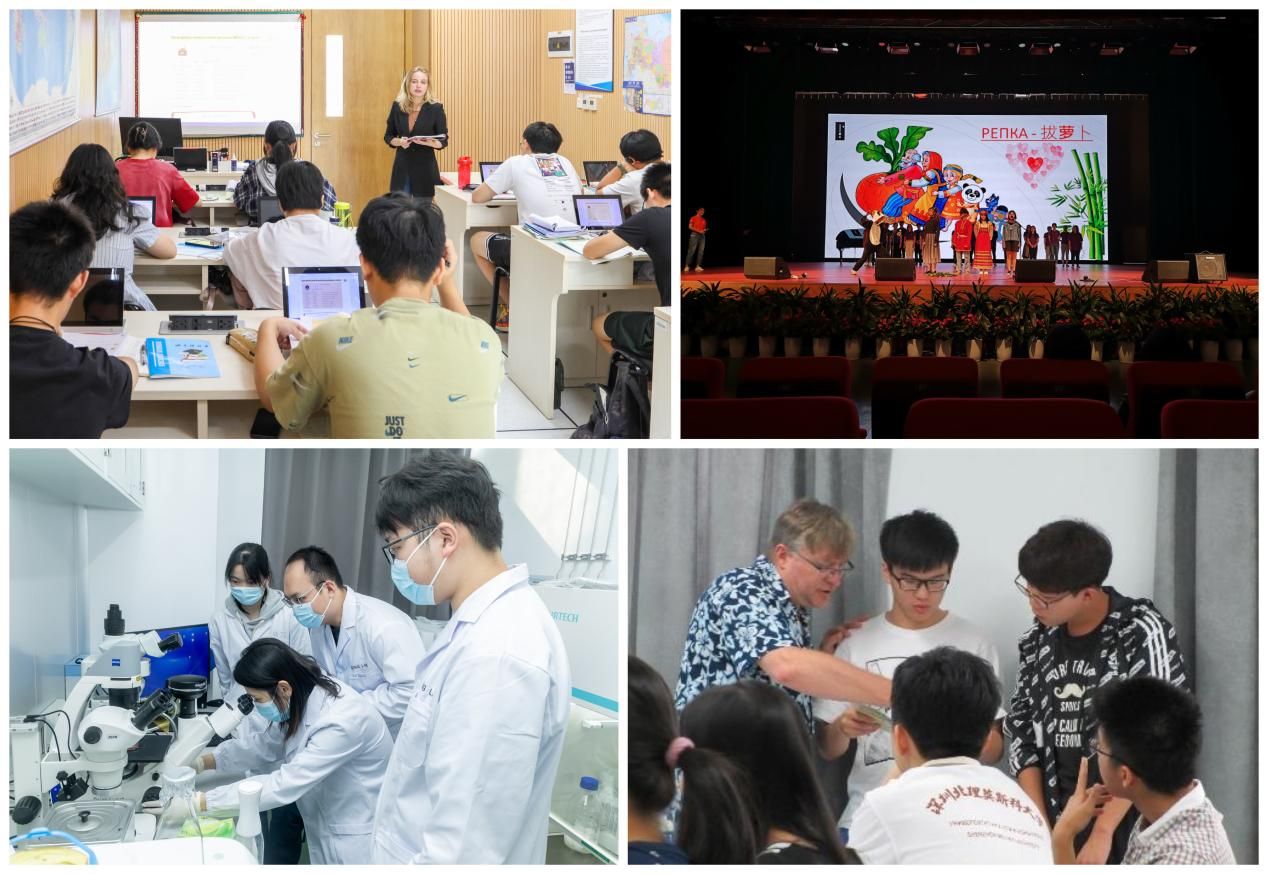
Small-class, immersive, seminar-style, and heuristic teaching
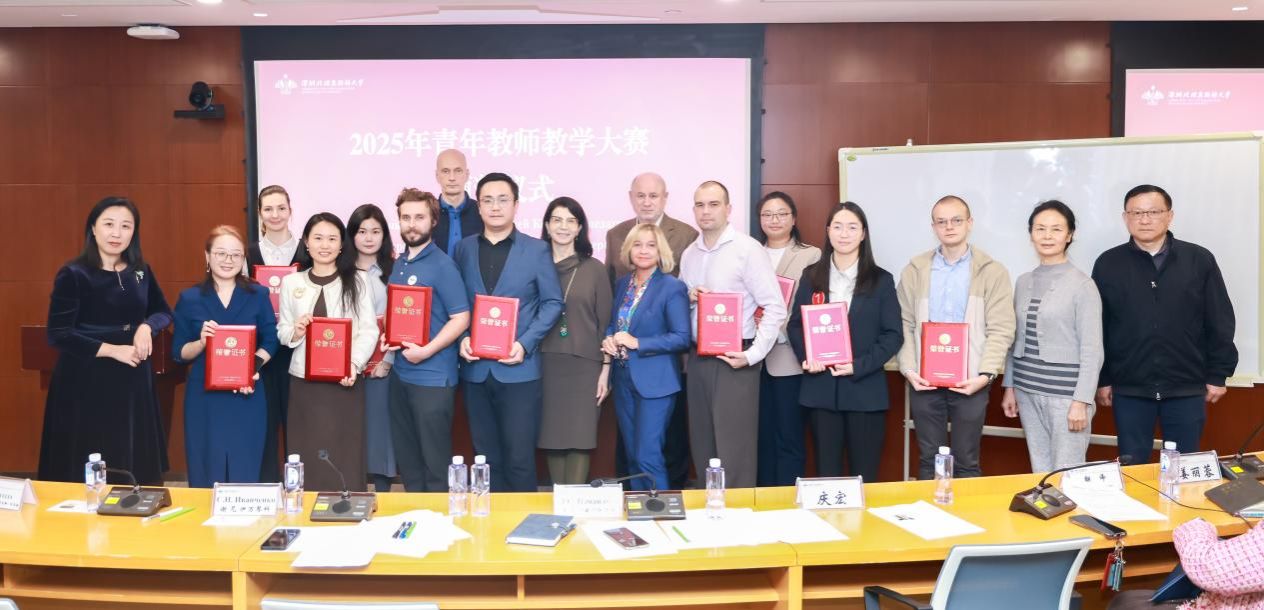
2025 Young Faculty Teaching Competition
Over the past decade, the university has focused on empowering students through scientific innovation and practice, yielding abundant talent cultivation achievements. Adhering to the principles of promoting learning through competitions and integrating research with practice, the university has built multi-tiered platforms for scientific and technological innovation, guiding students to engage in academic competitions, research, and innovative practices, fully unleashing their innovative potential. Students have actively participated in high-level competitions including the "Challenge Cup" China College Students' Entrepreneurship Competition, the China International "Internet+" College Student Innovation and Entrepreneurship Competition, the Lanqiao Cup National Software and Information Technology Professional Talent Competition, the American Mathematical Contest in Modeling (MCM/ICM), the China Undergraduate Mathematical Contest in Modeling (CUMCM), the National Undergraduate Physics Experiment Competition, the China University Robot Competition, the CCPC National Collegiate Programming Contest, the National English Competition for College Students (Category C), the National Russian Language Competition for College Students, the International Mendeleev Chemistry Olympiad, and the National Economics Comprehensive Game Experiment Competition for College Students. According to incomplete statistics, since its founding, students have won a total of 729 awards in disciplinary competitions, including 77 international, 249 national, and 403 provincial/ministerial-level awards. Undergraduate students have published 102 high-level papers and obtained 18 authorized patents. These figures vividly demonstrate the effectiveness of the university's China-Russia integrated education model and highlight students' solid professional foundation, outstanding innovation capability, and comprehensive international competence.
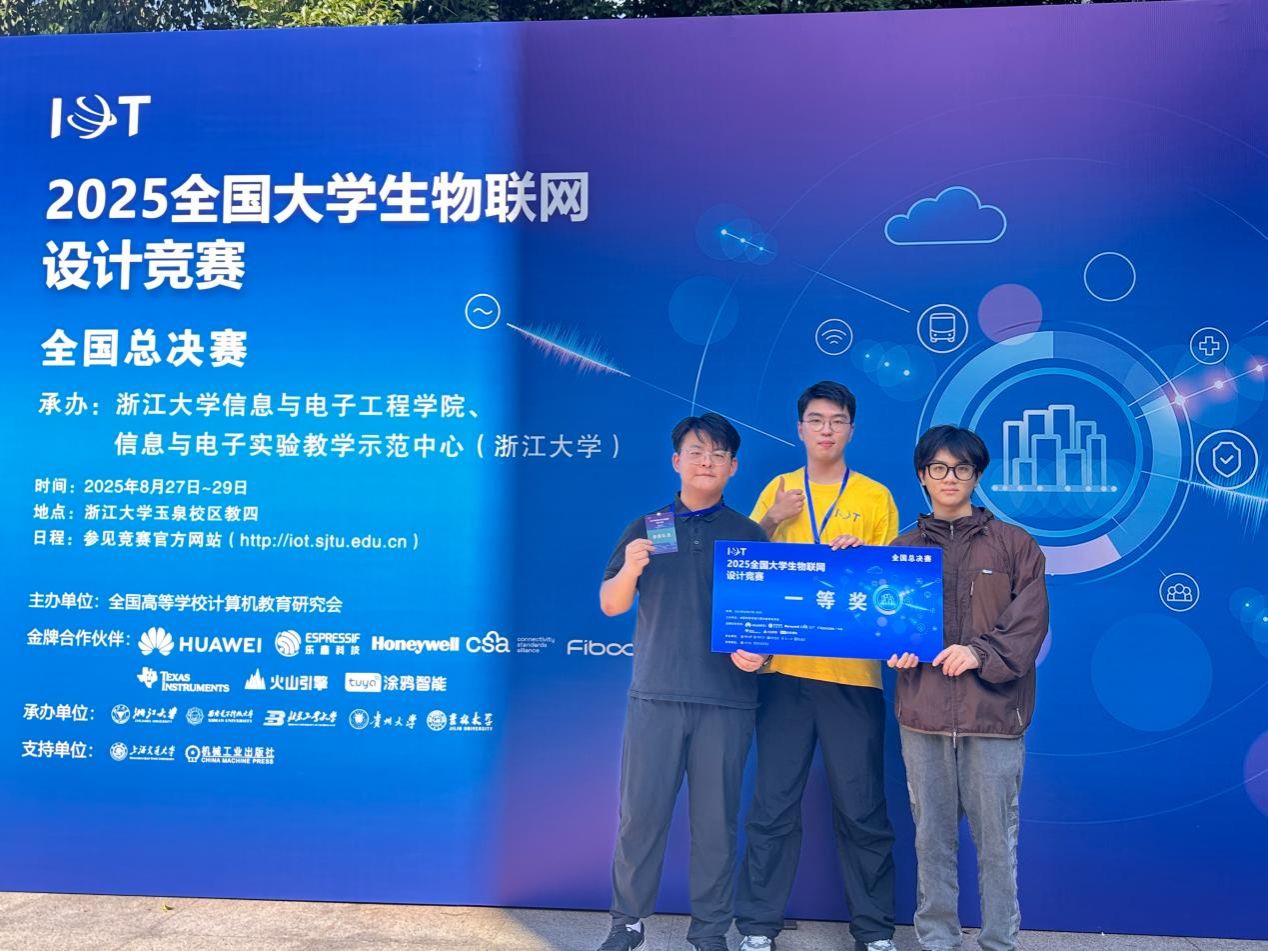
Liu Ruida, Zuo Junyu, and Cheng Yuyang, undergraduate students from the Faculty of Computational Mathematics and Cybernetics, together with Zhao Mingze, an undergraduate student from the Faculty of Biology, won First Prizes at both the East China Regional Final and the National Final of the 2025 (12th) National College Student IoT Design Competition.
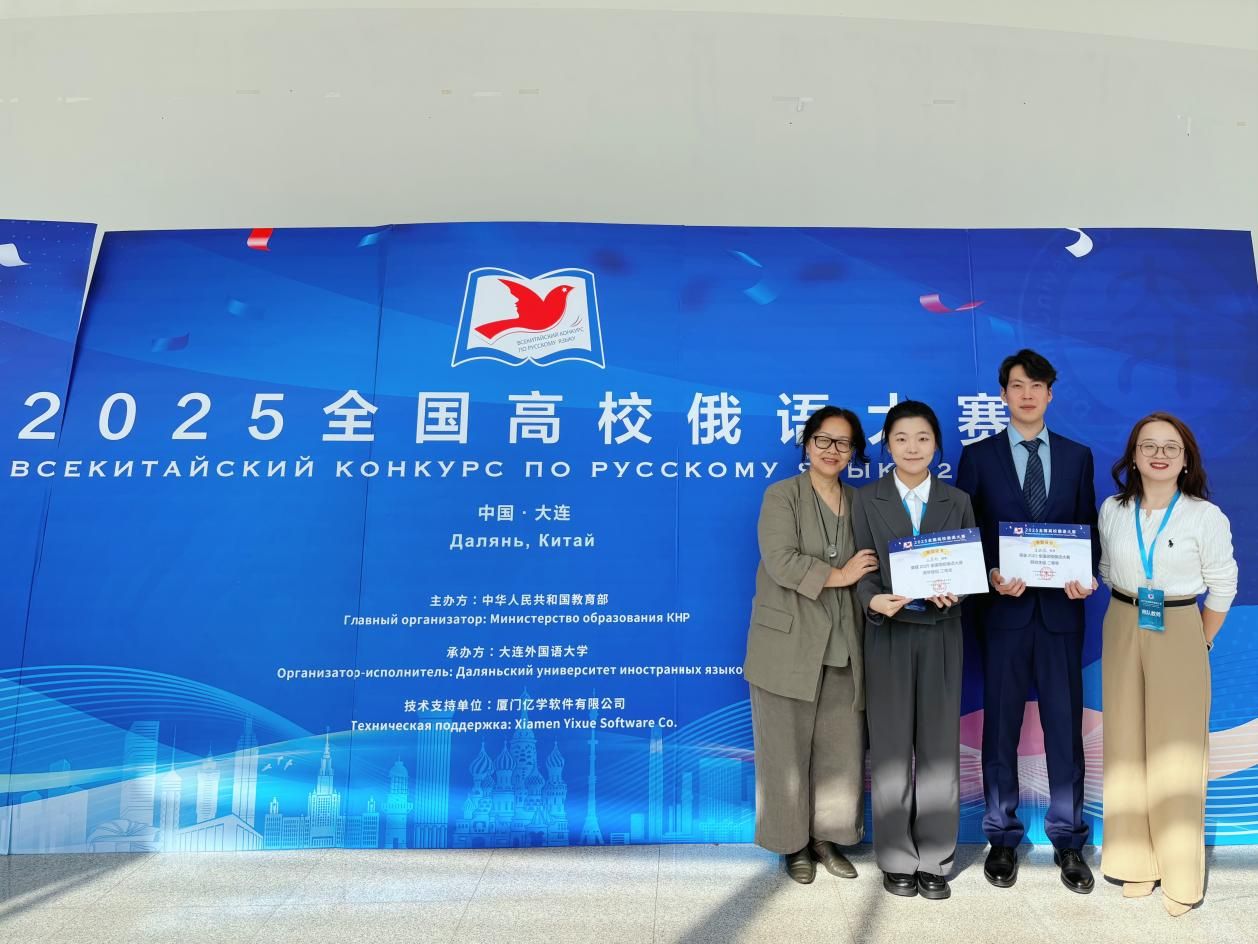
Wang Suyu and Fang Hengyu from the Faculty of Philology won the Third Prize in the Senior Year Group and the Second Prize in the Graduate Group respectively at the 2025 National Russian Language Competition for College Students.
Ten years of cultivation, with perseverance and lasting impact. Standing at the new starting point of the university's 10th anniversary, it will continue to uphold its fundamental mission of fostering virtue through education, continuously optimize the China-Russia joint talent cultivation system, constantly improve the teaching quality assurance system, innovate educational measures, and distill and promote exemplary cases. The university will strive to write a new chapter in talent cultivation for Sino-foreign cooperative education, contributing greater strength to cultivating more outstanding talents with a deep love for their country and a global vision, and to building an education powerhouse in the new era of educational opening-up.


 Application
 Job Opportunities
 Contact Us
 Rector's Email


